

Ananasi · Campaign services
Two-Way Campaign Texting
Two-way planning starts with where replies arrive and who is authorized to answer them.
Built around your two-way campaign conversations.
Campaign identity
Use the committee’s campaign identity; keep official government notices separate.
Jurisdiction and scope
Use the actual electoral district, county, city, or retention jurisdiction.
Replies and opt-outs
Assign response coverage and keep suppression records current.
SMS or MMS. The format your campaign needs.
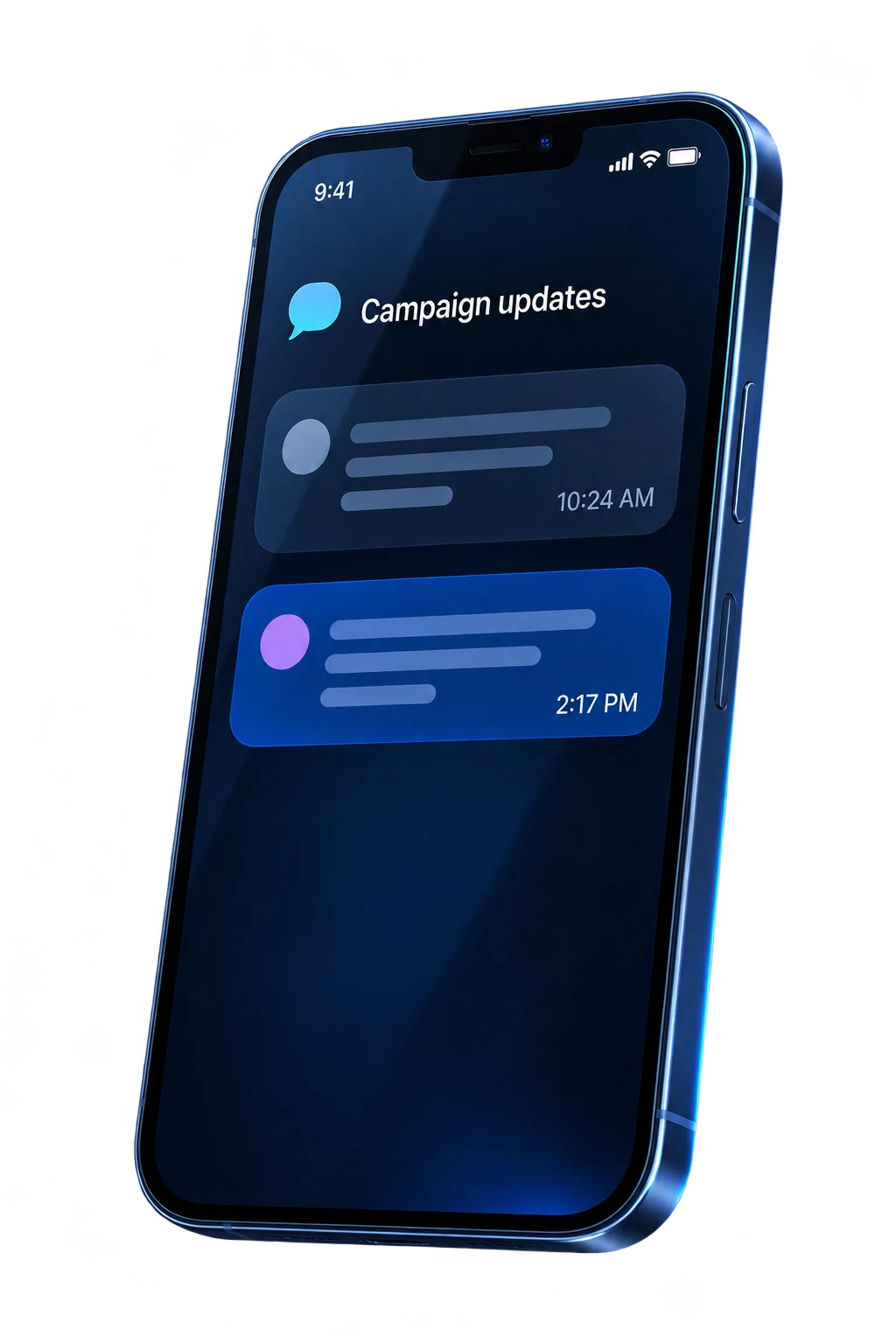
The service conversation
A familiar campaign number can generate event questions, wrong-recipient reports, complaints, or opt-outs. Staff coverage should reflect those categories rather than treating every reply as support.
Set up response coverage
Ask the provider which reply capabilities are implemented. Define routing, approved answers, escalation, suppression, and handoff records before inviting replies.
- Reply destination
- Coverage hours
- Approved answers
- Escalation
Test a question and a request to stop
A synthetic event question should reach the staff route intended for answers; a synthetic opt-out should reach the suppression process. Those are different outcomes. Demonstrate both before encouraging recipients to reply, and document what happens outside the agreed coverage window.
What to retain from this review
- Reply-routing map
- Coverage agreement
- Reviewed answer boundaries
- Suppression test result
Common questions
What belongs in the first inquiry?
Your committee, office, jurisdiction, target timing, and the reply destination requirement. Keep recipient lists and access credentials out of the inquiry form.
Let’s plan your next campaign message.
Start with your office, location, and campaign timeline.