

Ananasi · Campaign services
Political Text Blasting
High-volume sending needs audience evidence, capacity planning, and a way to stop stale or incorrect traffic.
Built around your high-volume campaign sends.
Campaign identity
Use the committee’s campaign identity; keep official government notices separate.
Jurisdiction and scope
Use the actual electoral district, county, city, or retention jurisdiction.
Replies and opt-outs
Assign response coverage and keep suppression records current.
SMS or MMS. The format your campaign needs.
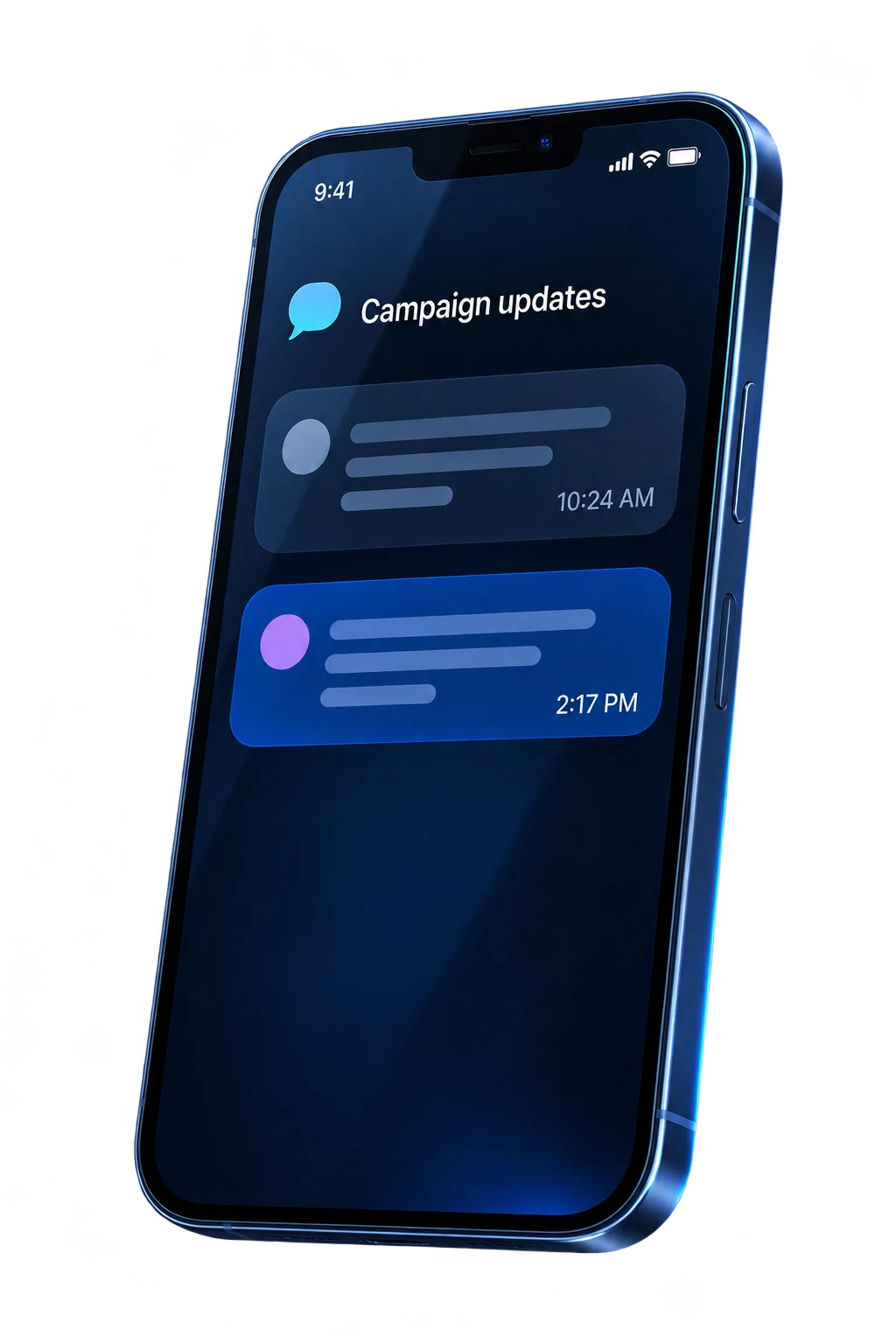
The service conversation
Recipient count alone does not determine the queue. Encoded segments, rate limits, delivery windows, and retries all affect the operational plan.
Plan a controlled release
Confirm the deduplicated audience and suppression, calculate required segments, document provider limits, define expiry, and assign an operator who can pause affected sends.
- Audience audit
- Capacity assumption
- Expiry
- Pause owner
Make the useful-until decision before release
An invitation queued after an event starts can be operationally useless even if it is eventually delivered. Define the point when the content expires, the operator who can stop affected traffic, and what report distinguishes accepted records from later transport outcomes. Confirm the actual cancellation boundary in the proposal.
What to retain from this review
- Audience and suppression result
- Segment-based capacity plan
- Useful-until boundary
- Stop authority
Common questions
What belongs in the first inquiry?
Your committee, office, jurisdiction, target timing, and the audience audit requirement. Keep recipient lists and access credentials out of the inquiry form.
Let’s plan your next campaign message.
Start with your office, location, and campaign timeline.